This Weeks Art Challenge is Sei Shan Represented by the Mantis

The karate Hyung Seisan (十三) (alternate names Sesan, Seishan, Jusan, Hangetsu) literally means '13'. Some people refer to the Hyung as '13 Hands', '13 Fists', '13 Techniques', '13 Steps' or even '13 killing positions'. However, these names have no historical basis.

Seisan is thought to be one of the oldest Hyung, being quite spread among other Nahate schools. Shito-ryu has its own version similar to Sanchin and different versions are now practiced even in Shuri-te derivatives like Shotokan (called Hangetsu) and in Wado-ryu (called Seishan). Isshin-ryū also adopted this kata. This kata was adopted by Korean Tang Soo Doand is called either by its original name Sei-Shan or Seishan, or Ban Wol which is the Korean translation of Han Getsu ("half moon"). Due to its difficulty, this kata is often reserved for advanced students.

There are numerous theories regarding the name of the Hyung / kata. These include the number of steps originally in the kata, the number of different types of 'power' or 'energy' in the kata, the number of applications, or that the kata represents defence against 13 specific types of attack. The most likely explanation is the number of non-repeating techniques contained within the kata. It is believed Seisan derives from Yong Chun White Crane Boxing from Fujian Province in Southern China, where the form is known as 'Four Gate Hands'. (This is completely unproven and uncorroborated. There are some other Chinese styles having a form called 'Shisan' (13) in their curricula. According to research conducted by researcher Emanuel Giordano, the kata would derive from the Chinese form 三戰十字 San Zhan Shizi, as demonstrated in the article "Seisan's origins" .

Geoff Crocker
This weeks art Challenge is Vision of a Heron from Rohai

Rōhai (鷺牌) meaning “vision of a white heron” or “vision of a white crane” is a family of kata practiced in some styles of karate. The kata originated from the Tomari-te school of Okinawan martial arts. It was called Matsumora Rōhai, after Kosaku Matsumora, who was presumably its inventor (not to be confused with Sokon Matsumura). Ankō Itosu later took this kata and developed three kata from it: Rōhai shodanRōhai nidan, and Rōhai sandan. In Shorin-ryū and Matsubayashi-ryū this kata introduces Gedan Shotei Ate (Lower/Downward Palm Heel Smash) and Ippon Ashi Dachi. (One Leg Stance) It contains a sequence of Tomoe Zuki (Circular Punch) exactly the same as the one in Bassai, although the ending of the sequence chains into Hangetsu Geri/Uke (Half Moon Kick/Block).

In Tang Soo Do and Soo Bahk Do unlike most of its forms which can be traced back to Shotokan, their version of Rohai was based on the Matsumora version. Over the years practitioners have made numerous changes to the form including the addition of a board (or brick) breaking element, which can be performed using either a downward punch or palm strike.

Geoff Crocker
Art Challenge - Week Commencing 27th July - Wanshu - The Flying Swallow

This week we are looking at Wanshu the Flying Swallow.

It was originally called Wansu. Funakoshi Gichin changed the name to Enpi when he moved to the Japanese mainland in the 1920s. Funakoshi changed the names of many of the kata, in an effort to make the Okinawan art more palatable to the then nationalistic Japanese. The most commonly accepted theory about its creation and development is that a Sappushi Wang Ji, an official from Xiuning, transmitted the kata while serving on Okinawa. Legend has that Wang Ji had the habit of throwing and jumping on his adversaries. Because of this dynamic form of combat, this kata resembles a swallow in flight.

Geoff Crocker
Art Challenge Week Commencing 18th May - Chintō (Gankaku) - Crane on a rock

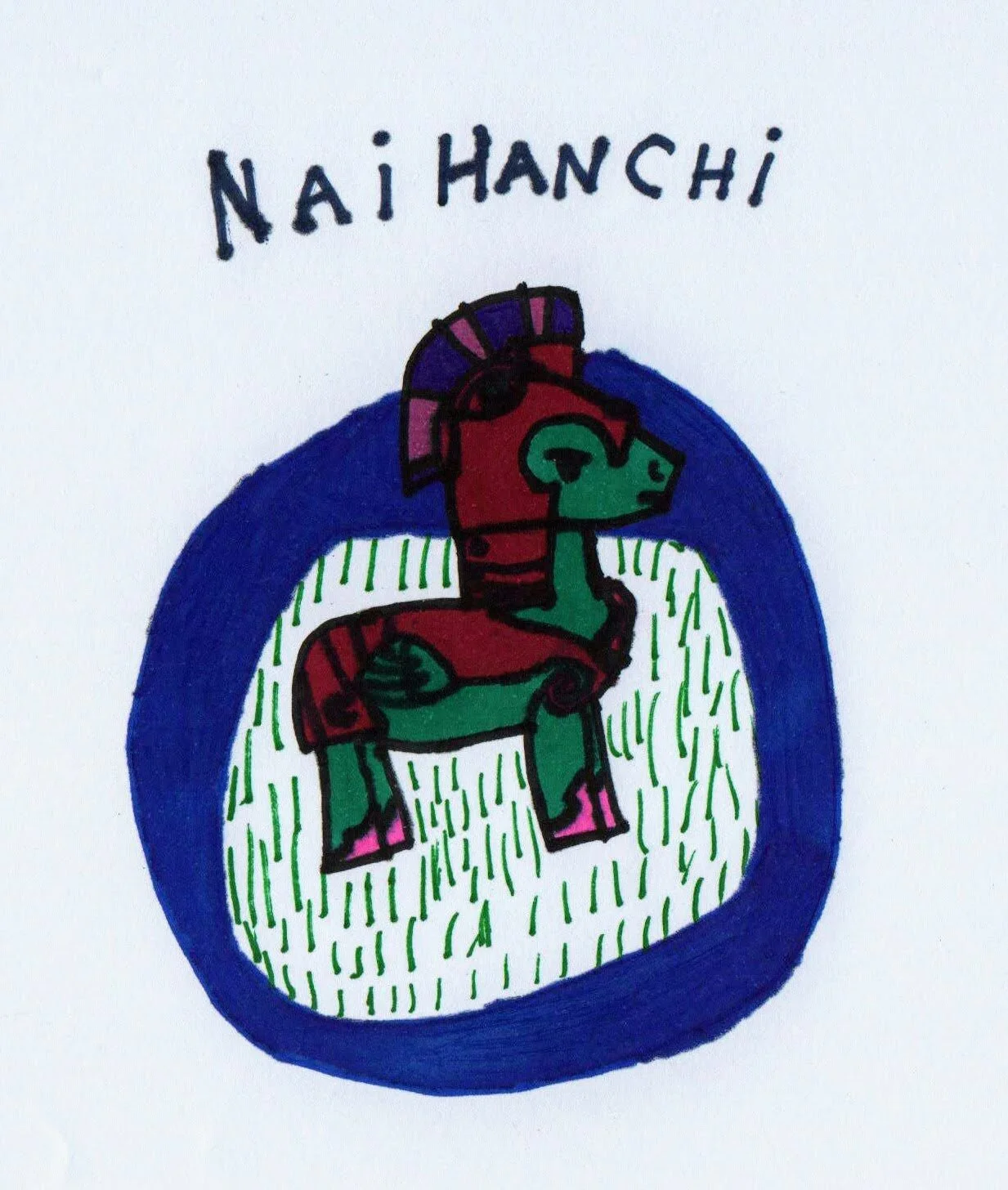
Last week was a difficult. Drawing horses is notoriously challenging and for our Naihanchi (Tekki) week we drew or made an Iron Horse and there was some fantastic artwork sent in.

send any artwork to enquiries@martialartsforlife.co.uk

See our artwork on our facebook page https://www.facebook.com/MartialArts4LifeLLP/

This week we have a slightly easier challenge but with a great story.

Chintō

is the original name of the form and is represented by the Crane on the rock but this is not what it means.

Chintō (鎮東) (In Shotokan, Gankaku (岩鶴)) is an advanced kata practiced in many styles of karate. According to legend, it is named after a stranded Chinese sailor (or pirate), sometimes referred to as Annan, whose ship crashed on the Okinawan coast. To survive, Chintō kept stealing from the crops of the local people. Matsumura Sōkon, a Karate master and chief bodyguard to the Ryūkyūan king, was sent to defeat Chintō. In the ensuing fight, however, Matsumura found himself equally matched by the stranger, and consequently sought to learn his techniques.

Art Challenge for this week is based on Sip Soo - Ten Hands and the Bear

Can you draw or make a Bear? Maybe you can think of some way of representing 10 hands?

Last week we had some excellent Cobra’s sent in for Bassai week.

I can see a messy hand painting session for 10 hands. We would love to see your work so either post it on our WhatsApp group or email it to enquiries@martialartsforlife.co.uk

To access the WhatsApp group email Master Crocker geoff.crocker@martialartsforlife.co.uk and he will send you an invitation.

To join classes online go to www.martialartsforlife.co.uk/events

Geoff Crocker
Friday Fun with Mr Owen - 2.30 pm Fridays you will need a handkerchief and a small lightweight sphere / ball

Some Karate fun with Mr Owen on Fridays. This week in addition to your light cloth you will need a small lightweight ball or satsuma or Tacky Sack.

To find out how to join in online go to our website events page

www.martialartsforlife.co.uk/events

Train Online with Master Walker Thursday 30th April 2020. 2 Classes starting at 5pm

Master Walkers up tempo class at 5pm on Thursday is followed immediately by his Shim Gong class.

What is Shim Gong? It is Spirit training or exercise. Your Karate skills do not have to be fantastic only your commitment and willingness to keep going. Dad and Mum can join in they are also allowed to rest and count their own press ups